AI adoption with productivity and control built in.
- Assess
- Govern
- Implement
- Train
- Measure
- Scale
AI governance & adoption for financial services
We help banks, fintechs and insurers identify where AI creates real value, govern how it is used, implement the right solutions, train teams and measure what actually works.

AI adoption with productivity and control built in.
Backed by Speedwave, our open-source AI-SDLC framework
What scalable AI adoption requires
AI has to be useful enough for people to adopt, controlled enough for the organisation to trust, and measurable enough to justify scaling.
AI has to be useful enough for people to adopt, controlled enough for the organisation to trust, and measurable enough to justify scaling.
Productivity
Help people do more valuable work faster.
Adoption
Move beyond pilots into repeatable everyday workflows.
Control
Know where AI is used, what it can access and who remains accountable.
Evidence
Measure usage, impact, risk and compliance.
Key challenges
AI experiments are easy to start. The difficult part is turning fragmented usage into secure, useful and repeatable ways of working across the organisation.
Different teams adopt different models, assistants and workflows before the organisation has agreed what should be allowed.
Policies written without understanding how people actually use AI either fail to control risk or make useful adoption unnecessarily difficult.
AI gets applied where it is interesting rather than where it improves cycle time, quality, customer experience or operational cost.
A successful PoC does not answer how to train teams, manage access, measure effectiveness or scale usage safely.
Tool adoption and licence counts do not demonstrate whether AI is actually improving delivery or business outcomes.
AI Act, GDPR, DORA and internal governance create obligations around risk, data, oversight and evidence.

Featured · Speedwave
Speedwave is Speednet's open-source AI-SDLC framework for regulated engineering teams. It works around the AI tools developers already use, adding controlled environments, access boundaries, sensitive-data protection, auditability and governance.
Limit what AI can access across code, tools and project context.
Reduce exposure of credentials and sensitive information in AI-assisted workflows.
Create visibility and evidence around AI-assisted engineering activity.
Work with approved external or local models instead of forcing one AI vendor.
Developers get AI assistance. Your organisation keeps control.
Explore Speedwave
Governance meets performance
Control enables scale. Measurement proves value.
Clear access, data and approval boundaries.
01
AI embedded into the workflows people already use.
02
Training, standards and support beyond the first pilot.
03
Productivity, quality, usage and risk tracked against a baseline.
04

Let's talk AI
Whether the challenge is governance, adoption, measurable productivity or moving a promising use case into production, we can help define the next step.
Our approach

A practical way to start with Speedwave
A focused workshop to identify a high-value engineering use case, define the required controls and create a measurable path to pilot.
A focused workshop to identify a high-value engineering use case, define the required controls and create a measurable path to pilot.
Priority use case
A concrete workflow where AI can create measurable delivery value.
Control requirements
Clear boundaries around code, context, tools and human oversight.
Success baseline
Agreed measures for productivity, quality and adoption.
Pilot roadmap
A practical path from assessment to controlled implementation.
Responsible AI by design
AI Act · GDPR · DORA · ISO 42001
AI Act · GDPR · DORA · ISO 42001
What AI do we use?
Systems · Models · Tools · Use cases
What can it access?
Data · Code · Repositories · Internal tools
Who remains accountable?
Owners · Human oversight · Decision rights
Can we prove what happened?
Logging · Monitoring · Evidence · Auditability
Featured insight
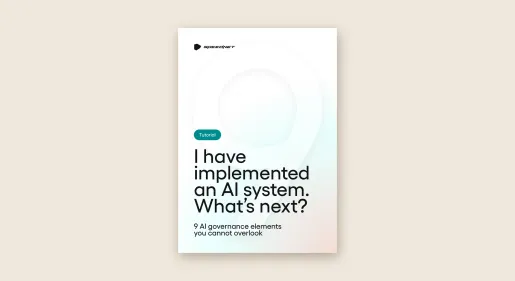
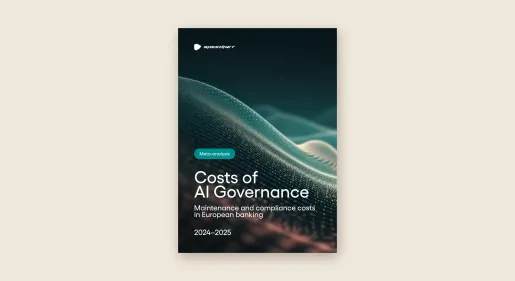
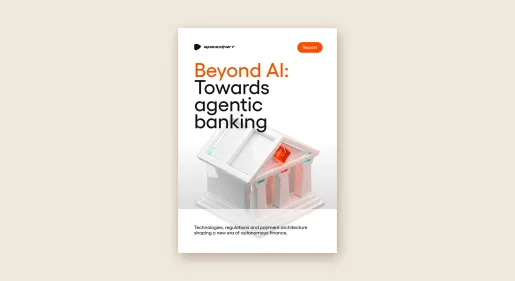
AI insights

Article • Reading 6mins

Article • Reading 19mins

Article • Reading 24mins

FAQ
No. We support the full adoption lifecycle: readiness assessment, use-case prioritisation, governance, architecture, implementation, training, rollout and measurement.
Yes. We can assess current tools and use cases, how data and systems are accessed, existing policies and controls, ownership and governance gaps, then provide prioritised recommendations.
Yes. We evaluate potential use cases against business value, feasibility, available data, integration requirements and risk rather than starting from a particular model or vendor.
Yes. Speednet can support architecture, integration, development, testing and production rollout after the assessment or pilot phase.
Yes. We can provide role-based training and practical workshops focused on approved tools, workflows, risk awareness and effective use of AI in everyday work.
We define a baseline before rollout and agree relevant measures such as delivery time, throughput, quality, rework or task-specific efficiency. The exact metrics depend on the use case.
Speedwave is Speednet's open-source AI-SDLC framework for regulated engineering organisations. It provides a controlled environment around AI-assisted software delivery so organisations can manage access, visibility and governance without replacing the AI tools developers already use.
No. Speedwave works around AI coding assistants rather than replacing them. Its role is to provide controlled access, security boundaries, governance and auditability around AI-assisted engineering.
Yes, where supported by the selected architecture. We can help design an operating model that accommodates local or external models depending on data sensitivity, security policy and infrastructure requirements.
Yes. We generally prefer a controlled assessment or pilot with a measurable baseline, then scale once value and controls have been validated.
Yes. Our approach is not tied to a single model or vendor. We can work with existing AI tools and architecture, then help define the controls, integrations and operating model required to use them safely and effectively.
Let's talk AI
Tell us whether the challenge is value, governance, implementation, adoption or measurement. We'll connect you with a Speednet expert and help define a practical next step.