Customer-facing products. Integration-first delivery.
- Web Apps
- Portals
- Platforms
- APIs
- Integrations
- CMS
Web platforms for financial services
We design, build and modernise customer portals, transactional platforms and web applications for banking, fintech and insurance - engineered around real integrations, security requirements and existing technology environments.

Customer-facing products. Integration-first delivery.
50+ companies have trusted Speednet
Financial institutions integrated into one digital lending platform25+
Microservices powering a multi-institution fintech platform100+
Active users supported on a large-scale web platform4M+
Designed platforms delivered across regulated digital products50+
Key challenges
A new interface is rarely the hard part. The real delivery constraints sit behind it: legacy systems, fragmented architecture, integrations, security requirements and dependencies across teams.
New journeys often depend on core systems, APIs, data services and third-party platforms that evolve at a very different pace from the frontend.
Mature applications accumulate tightly coupled components, outdated frameworks and technical debt that make seemingly simple changes risky.
Onboarding, lending, payments, servicing and self-service journeys rarely live inside one application. Every additional system creates another failure point and another delivery dependency.
Authentication, access control, sensitive data, accessibility, audit requirements and internal security review affect how the product must be built, not just how it is tested before release.
A solution that works for the first product release may struggle as traffic, functionality, teams and integration points grow.

Beyond the frontend
The frontend is what the customer sees. Delivery speed, reliability and scalability depend on how the experience layer connects to business logic, data, integrations and infrastructure underneath.
Fast, accessible customer-facing experiences. Web applications, portals and transactional journeys designed around usability, performance and accessibility.
Business logic that can evolve without rebuilding the experience. Services and applications responsible for workflows, rules, orchestration and product-specific logic.
Manage complex content without turning every change into a development project. Traditional and headless CMS architectures for content-heavy customer journeys, corporate platforms and multi-market digital estates.
Make production part of the architecture. Cloud, containers, CI/CD, observability, security and deployment patterns designed around how the product will actually operate.


Let's talk web
Whether you need a new customer-facing product, a major platform modernisation or help untangling the architecture behind an existing web estate, we can help define the right path forward.
Our process
We adapt to where you are today: building a new platform, extending a live product or modernising an existing web estate.

Case studies
See how we've helped organisations build, modernise and scale customer-facing products in complex technology environments.
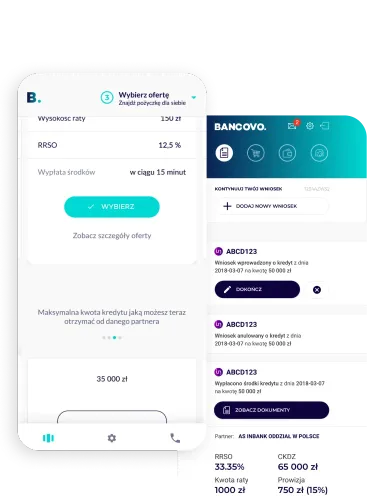
Bancovo Fintech · Lending
A scalable fintech ecosystem built on 100+ microservices and complex financial integrations.
Read more about Connecting 25+ financial institutions in one lending platform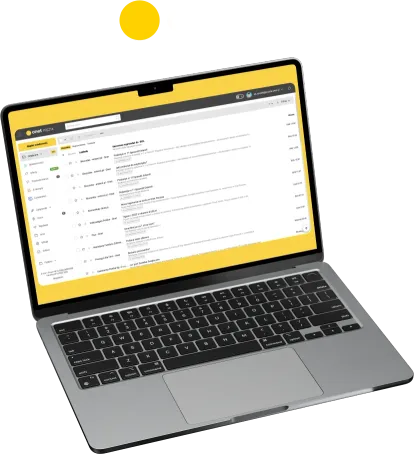
Onet Media
We got together a team of designers, devs and testers who have built the entire frontend for Onet webmail.
Read more about Webmail interface loved by millions
FICO Fintech
Professional and efficient CMS platform with 9 language versions.
Read more about Professional and efficient CMS platform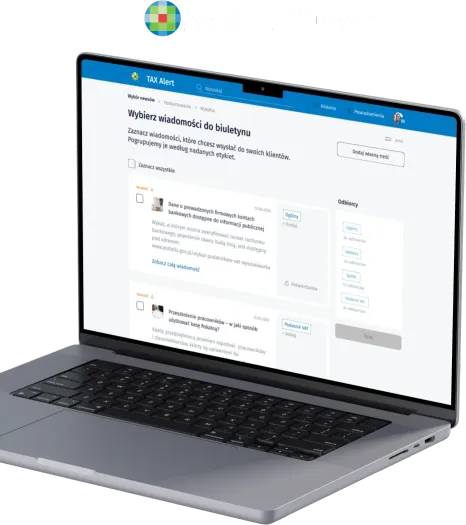
Wolters Kluwer Media
A platform enabling companies to prepare an information bulletin for their customers.
Read more about A platform to prepare bulletinsWe were impressed by Speednet's ability to comprehend the exact skill set required for our project and quickly assembled a team of specialists who were ready to hit the ground running.
Web as a product platform
For financial organisations, web platforms increasingly sit between customers, internal operations and a growing ecosystem of core systems, data sources and external services. Their architecture directly affects how quickly the business can change.
Customer portals increasingly handle journeys that previously required branches, contact centres or manual operations.
The value customers see in the frontend depends on data, business rules and services sitting behind it.
Tightly coupled applications make every change more expensive. Clear boundaries make individual parts easier to evolve.
Large digital estates rarely get the luxury of a clean rewrite. The winning approach is usually to improve the architecture while the product continues to operate.

Featured insight

Web insights

Article • Reading 1 mins

Article • Reading 4 mins

Article • Reading 16 mins

FAQ
We build customer portals, transactional applications, digital banking platforms, lending and servicing solutions, self-service products, back-office applications and other complex web platforms for financial organisations.
Yes. We can take responsibility for the complete product stack, including UX, frontend, backend services, APIs, integrations, testing and production delivery, or work on a selected layer alongside your existing teams.
Yes. In many mature environments, an incremental approach is safer and more practical than a big-bang rewrite. We can modernise selected components, introduce new architectural boundaries and replace legacy technology while the existing platform continues to operate.
Yes. Most financial projects we work on involve existing systems rather than greenfield infrastructure. We design the customer-facing platform around real APIs, data flows, security constraints and legacy dependencies.
Yes. We work with both traditional and headless CMS architectures and can integrate content platforms with customer-facing applications, APIs and existing enterprise systems.
Security requirements are considered from the architecture stage onward, including authentication, authorisation, data protection, secure development practices, auditability and the organisation's own security and release processes.
Yes. We can assess the existing architecture, technical debt, delivery bottlenecks and business roadmap, then identify which areas should be retained, refactored, replaced or separated before committing to a transformation programme.
Yes. We can add individual specialists, provide a complete delivery squad or take ownership of a defined product or modernisation stream while working inside your engineering standards, tools and governance.
Yes. We can cover product discovery, UX, architecture, frontend and backend engineering, integrations, QA, security review, production rollout and ongoing development.
No. Our deepest experience is in banking and financial technology, but we also build complex platforms in insurance and other industries where integration, scale, security and reliability matter.
We use AI to support activities such as implementation, refactoring, testing, documentation and legacy modernisation. In regulated environments, we can introduce AI through governed workflows that control access to code and project context, retain human approval and provide visibility over how AI is used.
Let's talk web
Tell us what you're building, modernising or trying to simplify. We'll connect you with a Speednet expert who understands complex web platforms and can help define the right way forward.