Complex systems. One connected delivery layer.
- Core Systems
- Payments
- APIs
- Partners
- Middleware
- Legacy
Integration services for financial technology
We design and modernise the integration layers that connect financial products with core systems, payments, partners and legacy technology.

Complex systems. One connected delivery layer.
Integration-first delivery for regulated environments
Financial institutions connected through one fintech platform25+
Microservices orchestrated across one digital ecosystem100+
Supplier integrations delivered for an award-winning BNPL platform19
Delivery squad connecting PSPs, payment schemes and core bankingOne
Key challenges
The hard part is rarely connecting two APIs. The real challenge is coordinating systems with different ownership, release cycles, security models and business rules while keeping the customer-facing roadmap moving.
A new payment method, lending journey or partner service often touches several internal and external systems before it reaches the customer.
Core and legacy platforms often expose limited interfaces, use older protocols or require workarounds that slow every new digital initiative.
Financial institutions, PSPs, identity providers, schemes and technology vendors differ in APIs, security requirements, certification and release processes.
When frontend, backend, middleware and third-party integrations belong to different suppliers, problems often sit between contracts rather than inside one backlog.
Timeouts, retries, partial failures, data inconsistencies and dependency outages often emerge only under real production conditions.
Identity, data access, auditability, encryption and third-party risk requirements influence integration architecture long before implementation starts.

Integration architecture
As the number of systems, partners and channels increases, integration architecture determines whether new products can move independently or every release becomes a coordination exercise.
Simple where the dependency really is simple. Useful when there are few systems, stable interfaces and limited orchestration requirements.
Create clear interfaces around underlying systems. Expose business capabilities through APIs and services so customer-facing products do not need to understand every legacy dependency.
Coordinate workflows across multiple systems and partners. Centralise transformation, routing, retries and process orchestration where multiple dependencies need to behave as one business flow.
Decouple systems that should not have to move together. Use asynchronous events where real-time coupling would create unnecessary dependency and resilience risk.


Let's talk integrations
Whether you're connecting a new partner, modernising legacy interfaces or building an integration layer across a growing ecosystem, we can help define the right architecture and delivery approach.
Our process
We adapt to the environment you already have: existing systems, internal teams, external vendors, security processes and live customer journeys.

Case studies
We've helped financial organisations connect systems, partners and payment flows without slowing product delivery.
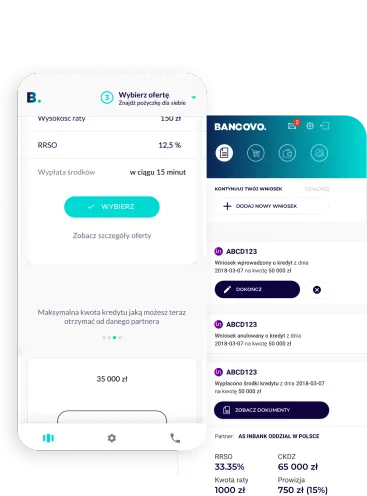
Bancovo Fintech · Lending
A scalable fintech ecosystem built on 100+ microservices and complex financial integrations.
Read more about Connecting 25+ financial institutions in one lending platform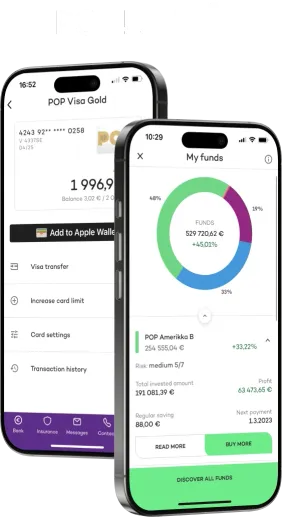
POP Pankki Banking · Mobile
A new digital banking experience supporting customer growth and a broader transformation of the bank.
Read more about Building a mobile bank from scratchIntegration as a growth layer
Banks and fintechs increasingly compete by combining capabilities from multiple internal platforms, financial institutions, payment providers and technology partners. The organisations that scale fastest are not necessarily the ones with fewer dependencies - they are the ones that manage them better.
Modern financial journeys combine capabilities from multiple internal and external systems rather than one monolithic platform.
A product roadmap can only move as quickly as its slowest critical dependency unless the architecture absorbs that complexity.
Shared APIs, services and orchestration patterns reduce the amount of custom work required for every new channel, partner or product.
As ecosystems grow, somebody has to own the behaviour across system boundaries, not just the code inside individual components.


AI-assisted integration delivery
AI can support code analysis, documentation, test generation, interface mapping and modernisation across large integration environments. Through governed AI-assisted workflows, we can accelerate this work while keeping code access, context and human approval under control.
Featured insight

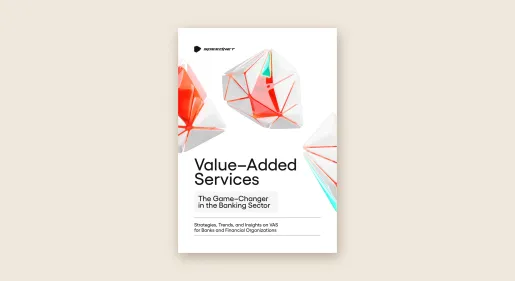

Integration insights

Article • Reading 1mins
Article • Reading 30mins

Article • Reading 8mins

Article • Reading 10mins

Article • Reading 15mins

Article • Reading 7mins

FAQ
We work across core and legacy systems, payment providers, financial institutions, partner APIs, identity services, middleware, data flows and other third-party platforms required by financial products.
Yes. Most of our financial-sector work involves existing technology estates. We can use APIs, adapters, middleware and service layers to connect modern products to legacy systems without requiring a complete core replacement.
Yes. We can replace point-to-point connections, introduce reusable APIs, separate orchestration logic and modernise selected interfaces while existing products remain operational.
Yes. Our experience includes payment providers, payment schemes, embedded payment flows and integrations connecting customer-facing financial products with surrounding banking systems.
Yes. Integration delivery often requires coordination across multiple organisations. We can take responsibility for technical alignment, interface implementation, testing, dependency management and production readiness across those boundaries.
We design around real distributed-system behaviour, including timeouts, retries, idempotency, partial failures, monitoring and recovery. The exact approach depends on the criticality and architecture of the flow.
Security requirements are considered as part of the integration architecture, including authentication, authorisation, data protection, encryption, auditability and the security standards of both internal and external systems.
Yes. We assess the number and type of dependencies, transaction characteristics, resilience requirements, ownership model and future roadmap before recommending the appropriate integration pattern.
Yes. We can provide individual integration specialists, embed a squad within your existing organisation or take ownership of a defined integration workstream while following your architecture standards and governance.
Yes. We can cover architecture, implementation, vendor coordination, testing, security validation, production rollout, observability and post-launch stabilisation.
We use AI to support activities such as codebase analysis, documentation, interface mapping, test generation and modernisation. In regulated environments, these workflows can be governed through Speedwave to control code access, context, approvals and auditability.
No. Banking and fintech are where we have the deepest integration experience, but the same capabilities apply to insurance and other complex environments where products depend on multiple systems, partners and legacy platforms.
Let's talk integrations
Tell us what you're trying to connect, modernise or simplify. We'll connect you with a Speednet integration expert and help define the right architecture and delivery path.